Best LEGO Alternative Brands by Use Case
Match the brand to the job and the choice becomes obvious. For a parts bin to build MOCs from, QiJi on price or Gobricks (Gao Zhuan) on precision. For Technic and motorised mechanisms, CaDA or Double Eagle, with Yuxing (Mould King) if you want motors and control in the same system. For display models, Pantasy. For young children, Sluban. For a tight budget, Wange. This guide explains the reasoning behind each pick, the two questions that decide most purchases, and where alternatives still lose.
Decide the job before the brand
Most bad purchases come from mixing two jobs: buying a set for display, then discovering the parts are too few to build from, or buying parts for a MOC and paying for a licensed design you never wanted.
| The job | Pick | Why |
|---|---|---|
| A parts bin to build MOCs | QiJi, then Gobricks for precision work | Widest part catalogue; best price per piece at the top of the category |
| Technic and mechanisms | CaDA / Double Eagle | Gears, liftarms and differentials are the most accurate outside LEGO |
| Motorised and programmable | Yuxing (Mould King) | Motors, battery boxes and receivers as one system, at about a third of the price |
| Display and collectable design | Pantasy | Original licensed design work, not recoloured copies |
| Children's play | Sluban | Simple builds, low price, low consequence |
| Lowest spend per part | Wange | Cheapest credible standard parts |
| Military and unusual colours | Sembo | Theme depth plus colours the official catalogue does not make |
Two questions that decide the purchase
- Will the model be displayed or handled? Display models reward design and finish; handled models reward clutch durability, where official parts still last longer. If a model will be rebuilt repeatedly, that difference is the whole argument.
- Do you need the parts, the design, or the experience? If you need parts, buy the brand with the widest catalogue and the best price per piece. If you need the design, pay for design. If you need the building experience, buy the best-documented instructions — instruction quality varies more than part quality.
What each pick actually gets you
QiJi — the default for parts-heavy builders. Wide catalogue, stable quality, medium clutch that neither fights you nor feels loose. Many published plans are written around its part availability, so parts lists map cleanly. Colour ranges rotate, so verify availability before designing around a specific colour.
Gobricks (Gao Zhuan) — precision. Moulding quality closest to official in the category. Buy here for tight sub-assemblies where one sloppy mould ruins a step. Higher per piece, justified by consistency; you will plan purchases rather than grab a lot.
CaDA / Double Eagle — mechanisms. The best non-LEGO gear and connector quality, and the natural default for functional vehicles and cranes. Quality runs higher on flagship Technic lines than on entry sets.
Yuxing (Mould King) — powered systems. The most complete alternative ecosystem for motors, battery boxes and remote control. For programmable builds, its components interoperate with the mainstream powered system at roughly a third of the official price.
Pantasy — display pieces. The design benchmark, and the most expensive brand in the category. Buy it for the model on the shelf, not for the parts.
Sembo — themed depth. Tanks, armoured vehicles and warships with detailed surface work, plus colour ranges that official sets do not produce. Narrow catalogue outside military subjects.
Wange — value. Wide catalogue, low prices, precision trailing the leaders. Entirely adequate for scenery, practice builds, and filling a parts bin.
Sluban — entry level. Good first experiences for children, with generous part counts at low prices.
Worked example: three builds, three picks
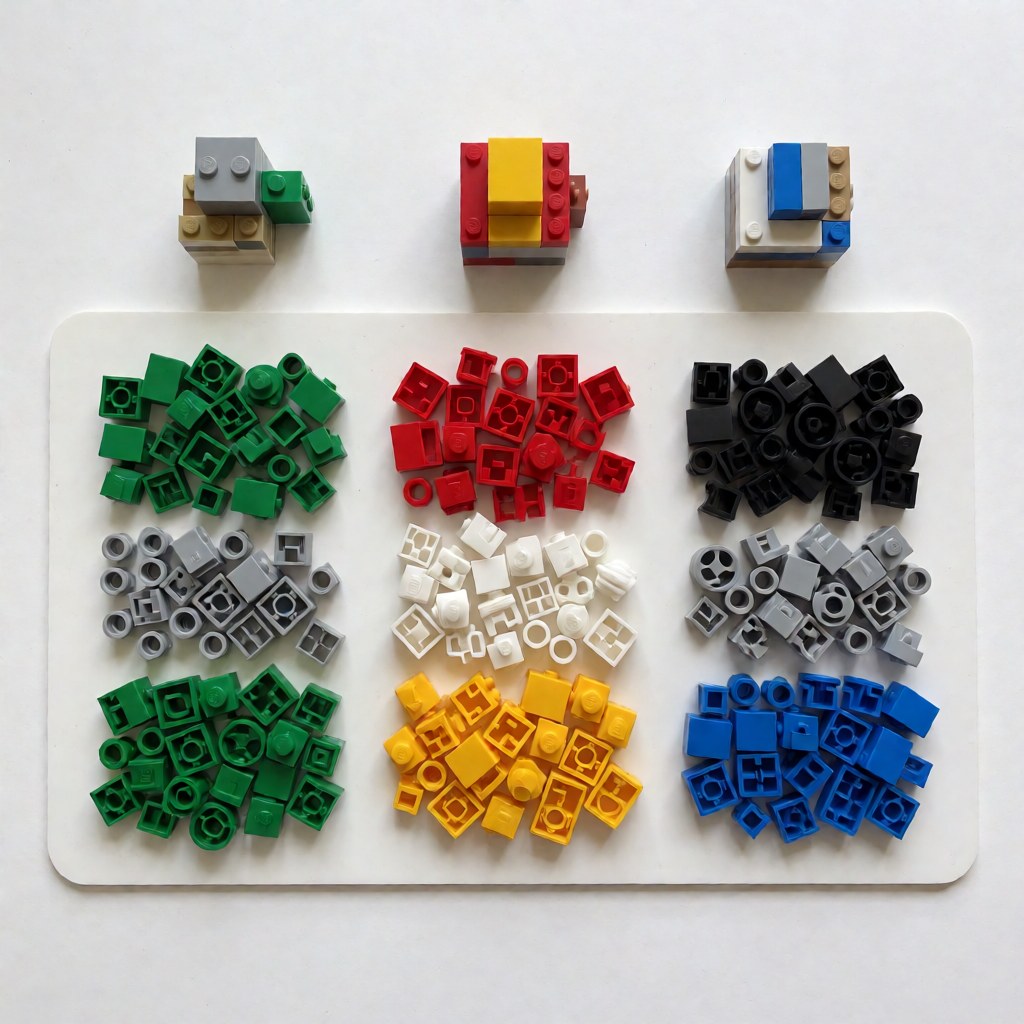
A 400-part scenery MOC for practice. Pick QiJi. Price per piece is the whole decision, the model is handled rather than displayed, and colour precision is irrelevant for scenery. Typical parts cost: 12–25 USD.
A 2,000-part display building. Two different answers depending on intent. Buy Pantasy or an equivalent design-led set if the finished model is the point. Buy QiJi or Gobricks parts against a downloaded plan if a MOC is the point — the same money builds a larger model and you keep the parts.
A powered crawler. Double Eagle or CaDA for the mechanism, Yuxing if off-the-shelf motors, receivers and control must come as one system. Budget roughly a third of the official equivalent for the drivetrain.
Where alternatives still lose
- Long-term play durability. Official parts hold their clutch through hundreds of rebuild cycles; compatible parts begin to loosen earlier. Irrelevant for a display model, decisive for a toy.
- Colour consistency. Both between makers and between batches. Keep any visible face to a single brand and a single order.
- Instruction quality. The category's weakest link. Part quality generally exceeds booklet quality, and a confusing booklet ruins an otherwise good set.
- Licensed themes. If the model you want depends on a licensed character, only the original maker can supply it.
- Resale value. Official sets hold value; alternatives largely do not. If you may sell later, that enters the maths.
A third option worth weighing: used
Before choosing between new official and new alternative, check the used market. A used official set can cost less than a new alternative of comparable size, and it arrives with original parts. The trade-off is completeness: verify the inventory against the instruction callout page and ask for photographs of the actual bricks, not the box. For high-value sets, ask for a photograph of the pile with a scale item in frame.
Six buying traps
- Paying for a licence you did not want. Licensed themes carry a premium. If you wanted parts, buy parts.
- Judging by the box photograph. Box images are renders. Look for an owner photograph of the finished model.
- Buying the whole parts list at once. Price the top 20 part types, build a third of the model, then decide.
- Splitting one colour across two orders. Batch colour variation is real and visible on a flat face.
- Mixing brands inside one structural assembly. Clutch variance makes the joints feel inconsistent; keep each sub-assembly to one brand.
- Ignoring the missing-part policy. Reputable sellers replace missing parts; marketplace resellers often do not.
How to test a brand before committing to it
Do not commit to a brand for a whole build on the strength of a review. Spend a small amount and test:
- Buy 20–30 basic bricks and plates in one colour from the brand you are considering. This costs very little and tells you almost everything.
- Clutch test. Press two bricks together, then hold one and shake the pair. It should not separate. Repeat with an official brick for a reference feel.
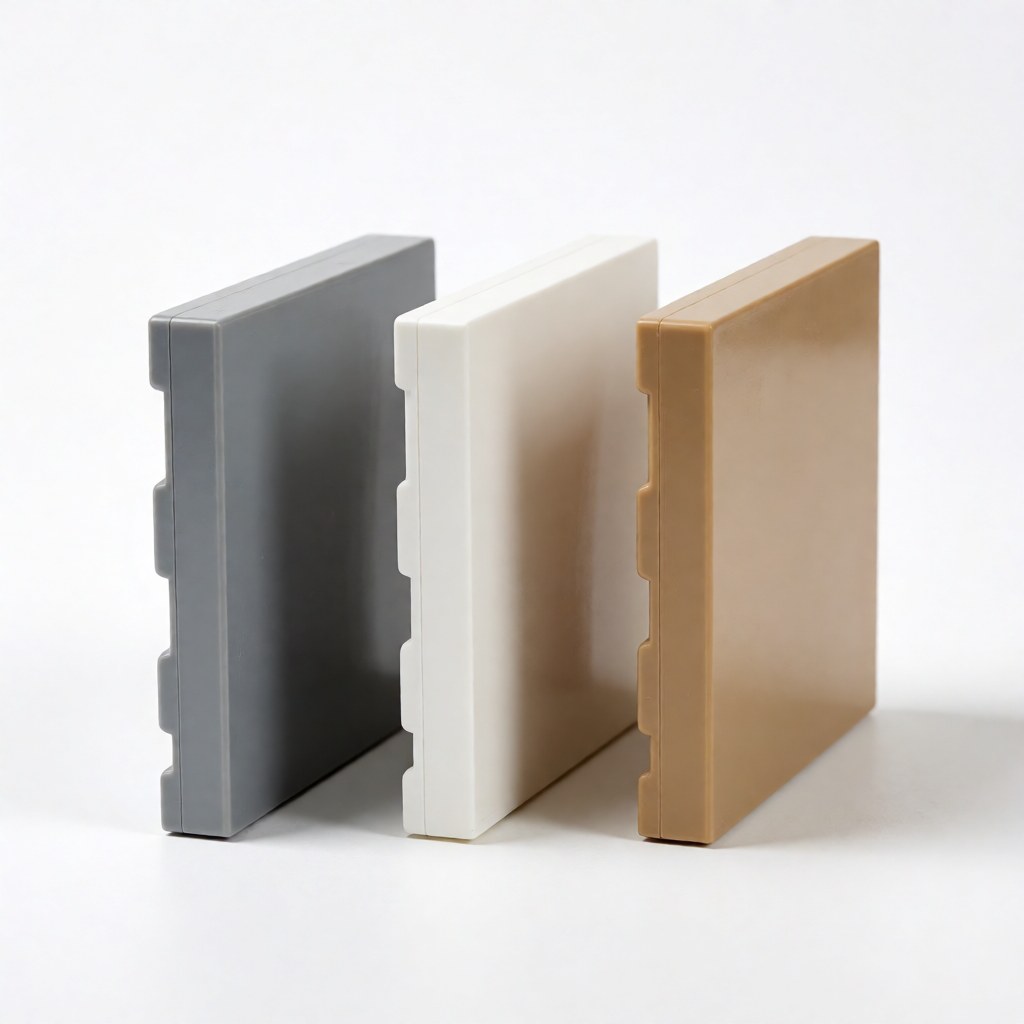
- Flatness test. Lay a large plate on a known-flat surface such as glass. Rock it with a finger; any visible rock will bend the model it goes into.
- Colour test. Put the sample next to parts you already own in the same nominal colour, in daylight rather than under a lamp. This is where brands differ most.
- Finish test. Check the moulding marks on the visible faces. A rough point on a stud top is invisible; a rough edge on a flat face is not.
If the sample passes all five, buy the brand for structural and visible work. If it passes only the first two, buy it for bulk and scenery and keep it out of anything load-bearing.
Reading a seller, not just a brand
The same brand sold through different channels behaves differently. Three signals worth weighing:
- Does the seller list a missing-part policy? Brand stores generally replace short shipments; third-party resellers often do not.
- Are there photographs from buyers rather than only renders? Buyer photographs show colour and finish as delivered, which is what you are buying.
- Is the part count stated precisely? "About 1,000 pieces" on a large set suggests an unverified inventory, and an unverified inventory is a risk on a build that depends on specific parts.
A short decision procedure
- Write down whether the model is for display or for handling.
- Write down whether you are buying parts, design, or experience.
- Pick the brand from the table that matches both answers.
- Check the price per piece, not the box price.
- Verify that the parts list maps to that brand.
- Buy the top 20 part types first.
Three minutes of this replaces most of the trial and error, and it stops the most expensive mistake in the category — buying a beautiful licensed set for parts.
FAQ
Q: Are compatible-brand bricks as good as official ones? A: For display models, effectively yes; the visible difference is small. For models rebuilt often, official parts hold their clutch longer. Judge by use, not by brand loyalty.
Q: Which single brand is the safest first alternative? A: QiJi for parts-led building and CaDA or Double Eagle for mechanical builds. Both are widely available and their part lists map cleanly to published plans.
Q: Can I mix official and alternative parts in one model? A: Yes. Geometry is shared, so they click together. Keep each structural sub-assembly to one brand so clutch stays consistent, and keep each visible face to one brand so colour does not shift.
Q: Is it worth buying an alternative set just for its parts? A: Only when the price per piece beats buying those parts individually. For a parts bin, a mixed bulk lot of standard parts usually wins; for a themed build, the set itself is the point.
Pick the job, then the brand. Plans on the BrickPlan blueprint library list the parts used, so you can price the same model in any of these brands before you spend anything.