How to Read LEGO Building Instructions: A Beginner's Guide
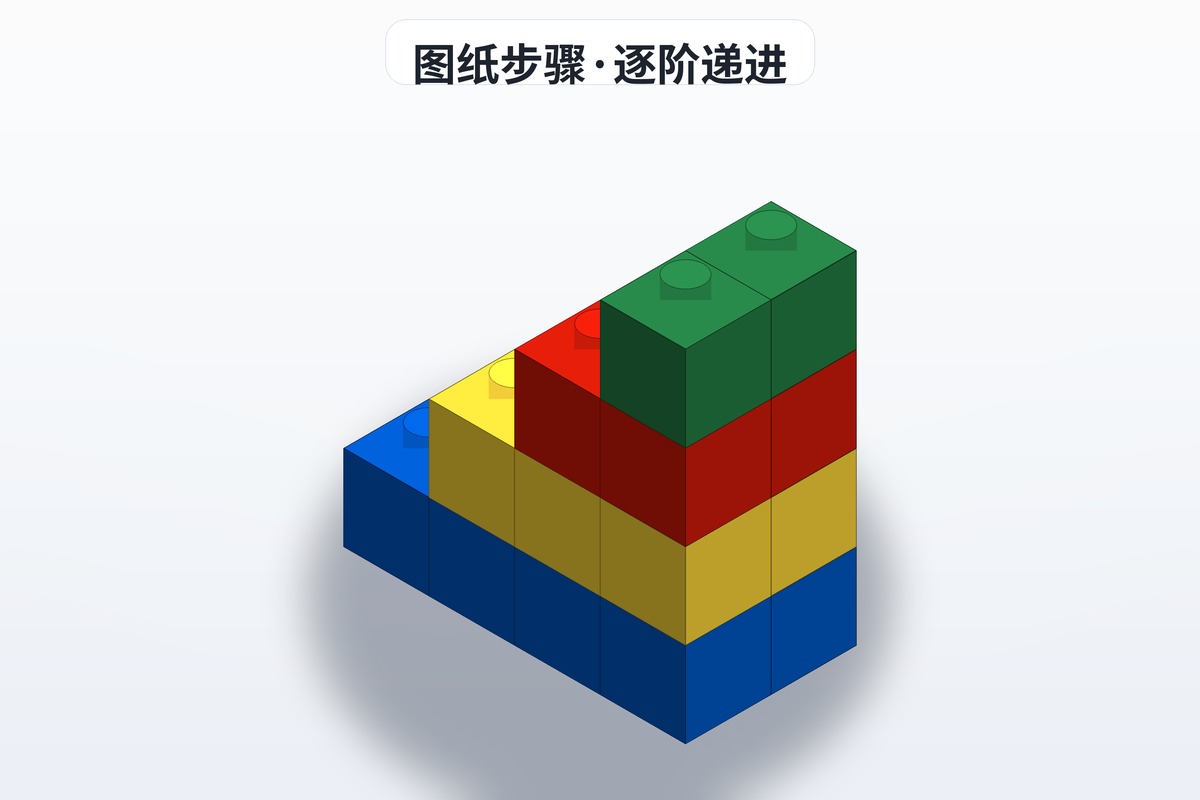
What stops most people on their first set isn't clumsy hands — it's not being able to read the manual. The logic behind LEGO-style instructions is highly consistent: the same handful of moves, repeated page after page. Learn those moves once and any set becomes manageable. This guide breaks the whole reading process down.
The Basics of Reading Step Diagrams
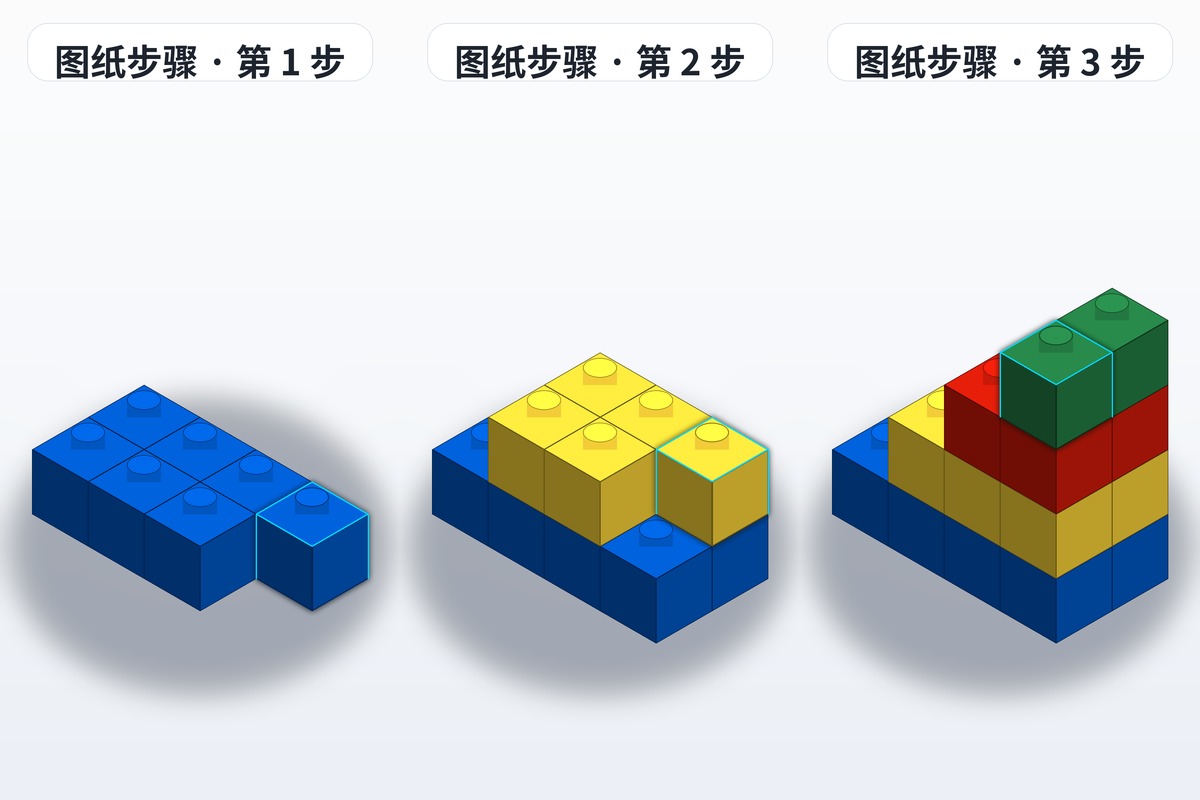

The core idea of a LEGO-style manual is "work through the steps, build up layer by layer." Three habits cover almost everything:
- Build by the numbers. Every page carries a step number at the top (Step 1, Step 2, and so on). Follow them strictly in order and never skip ahead — later steps assume the earlier ones are already sitting on the table.
- Look only for the new parts. In each step image, the grey or semi-transparent pieces are what you have already built; the coloured pieces are what gets added in this step. Ignore the grey and read the coloured ones and the page instantly gets simpler.
- Line up the studs. Arrows and red lines in the drawing show where a piece is pressed on. Check the stud-to-hole alignment and make sure the orientation isn't reversed — a brick that's rotated 180 degrees will usually still click on, so the picture is your only warning.
Get those three habits down and you can follow almost any manual to the final page of a set without stress.
The Numbering System and Sorting the Numbered Bags
Modern sets come with numbered bags of parts, and these are a major aid to reading the manual:
| Number | What it means | How to use it |
|---|---|---|
| Bag number 1/2/3… | Building order | Only open the bag you are currently on |
| Part number (e.g. 3001) | The unique ID for a piece | Use it when ordering or replacing a missing part |
| Instruction page number | Corresponds to the step | Use it to replace a lost manual |
The rule is simple: when the manual tells you to open Bag 2, open Bag 2 only and leave everything else sealed. Opening just the current bag cuts down the time you spend hunting for pieces, and it keeps the remaining parts from mixing into one undifferentiated pile.
Common Beginner Problems
A part takes forever to find
Sort roughly by colour first, then by size, and then check against the "new parts" area of the diagram. Taking two minutes before you start to heap the current bag's pieces into colour groups roughly doubles your speed.
You get halfway and realise a piece is facing the wrong way
Nearly every brick can be taken apart and rebuilt. Work it loose carefully with a brick separator or a fingernail — don't force it. Catching the error and redoing the step right away is far better than carrying on with a mistake that will cause problems five pages later.
The diagram is blurry or a page is missing
Download a high-resolution PDF from the official instructions library first, or find a digital copy on a platform like brickplan.cn to fill the gap. That is far more reliable than trawling the web for scanned copies of uncertain quality.
A piece sits loose
Before anything else, check whether it is facing the wrong way or whether you missed a piece entirely. A lot of what feels like "looseness" is really a part skipped in an earlier step — flip back a page and compare with the diagram and the cause is usually obvious.
A Few Final Words
Reading a manual comes down to three things: work in order, find the new parts, line up the studs. Add the habit of building one numbered bag at a time and even a two-thousand-piece set will move forward steadily. If you've lost the manual, or you want more MOC instructions to practise on, take a look at brickplan.cn (https://brickplan.cn) — high-resolution instructions, parts lists and matching tutorials are all there, from starter sets up to expert-level MOCs.