Chinese Bricks vs LEGO: An 8-Point Comparison
The answer depends entirely on use. For children who rebuild constantly, official parts still hold their clutch longer. For MOC building, large scenes and parts-driven projects, Chinese parts are the better buy at roughly a third of the price. For display models the gap is small. For licensed themes, only the original maker can supply the model. Most experienced builders do not choose — they mix, using official parts where durability matters and alternatives everywhere else.
Eight dimensions, judged on parts in hand rather than on branding.
The eight-point comparison
| Dimension | Official | Top Chinese brands | Verdict |
|---|---|---|---|
| Dimensional precision | Industry benchmark, tolerance around 0.005 mm | 90–95% of official on the leading brands | Close enough for any build |
| Clutch consistency | Uniform across a set, and over years | Usually good; varies between makes and batches | Official wins on consistency |
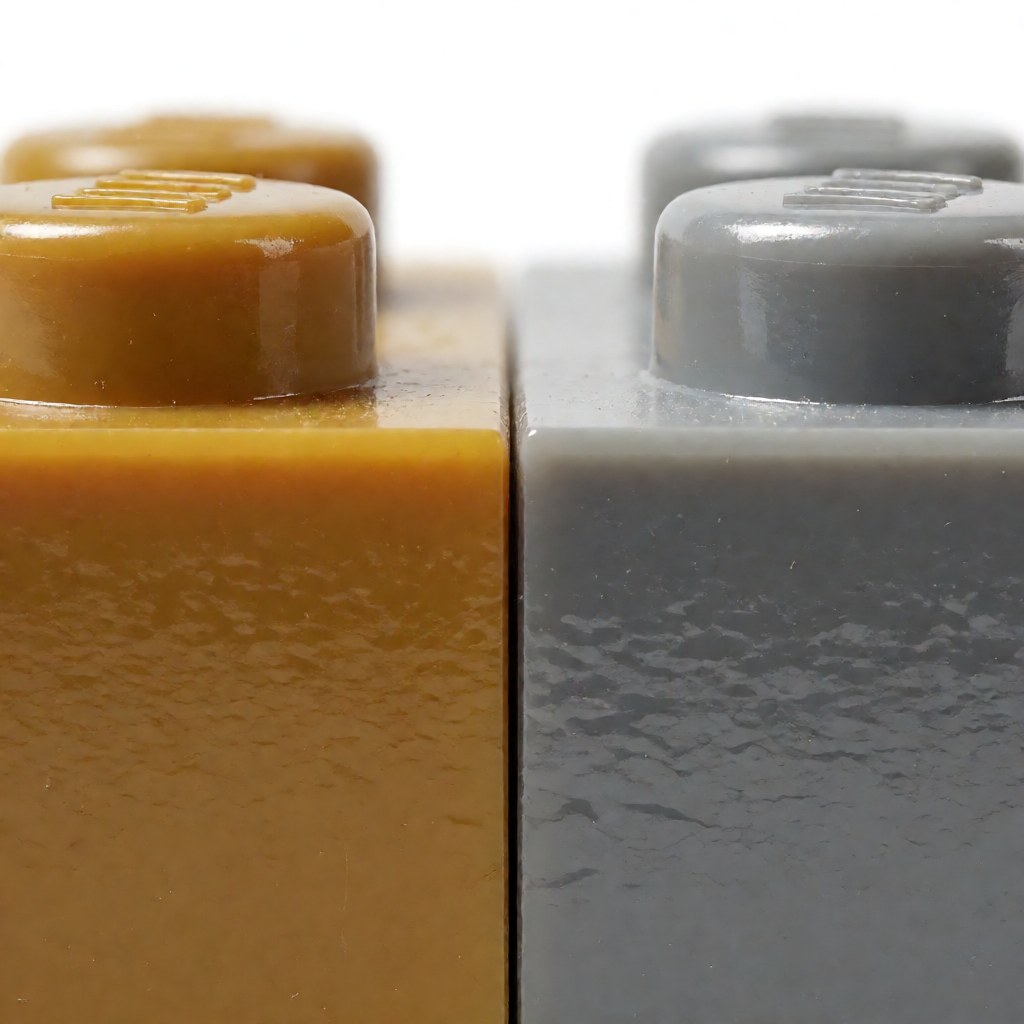
| Colour accuracy | Consistent between parts and runs | Close, but visible variation between batches | Official wins; matters on flat faces |
| Surface finish | Clean edges, minimal mould marks | Slightly rougher edges and marks | Invisible on 90% of parts |
| Original design | Strong licensed and in-house themes | Strongest at Technic and themed niches | Depends on the subject |
| Instruction quality | Reliable and well sequenced | Improving; the category's weakest link | Official wins |
| Part availability | Limited to current and recent parts | Wider, including discontinued colours and shapes | Chinese brands win |
| Price per part | Baseline | About one third, down to one fifth in bulk | Chinese brands win decisively |
Read the top half and the bottom half separately. The first four rows are about how the parts feel: official parts are more consistent, and the difference shows on visible faces and structures handled often. The last four rows are about what you can do: the alternative market is bigger, cheaper and better stocked for anything that is not a licensed model.
Scenario verdicts
Young children (roughly 3–8). Buy official, or a well-known entry-level alternative if the budget is tight. Parts that separate too easily frustrate young builders, and the constant attach-detach cycle is exactly where clutch durability matters most. Check the age grading either way.
MOC building from a plan. Chinese parts, clearly. A MOC needs hundreds of parts in specific colours, and the parts list is the cost driver. A 1,500-part model that costs 180–280 USD in official parts lands at 60–90 USD in alternative parts. Quality is sufficient for the structure, and precision brands handle tight sub-assemblies.
Large scenes and dioramas. Chinese parts, without much debate. Once a scene runs to thousands of parts, unequally distributed between structure and detail, the price difference funds the whole project. Use one brand per visible face to control colour drift.
Parts collection for future builds. Mix. Buy official for parts you will handle repeatedly, and alternatives in bulk for standard bricks and plates.
Themed or licensed collecting. Official only, for anything with licensed characters. Some alternative brands run their own themed ranges with genuine originality, which is a different purchase from a copy.
Display centrepiece. Either, judged per model. A design-led alternative set can outperform a mid-range official one on the shelf; but for licensed subjects, official.
Where official still wins
- Long-term play durability. Hundreds of rebuild cycles separate the two. For a toy, that is the whole question.
- Colour consistency within a set. Visible on large flat faces and on any model where one colour dominates.
- Instruction reliability. Dense builds benefit from well-sequenced booklets, and this is where alternative sets most often disappoint.
- Value retention. Official sets hold value; alternatives rarely do.
- Licensed themes. Unavailable elsewhere by definition.
Where the alternatives win
- Price per part, consistently, at roughly one third and occasionally one fifth for bulk standard parts.
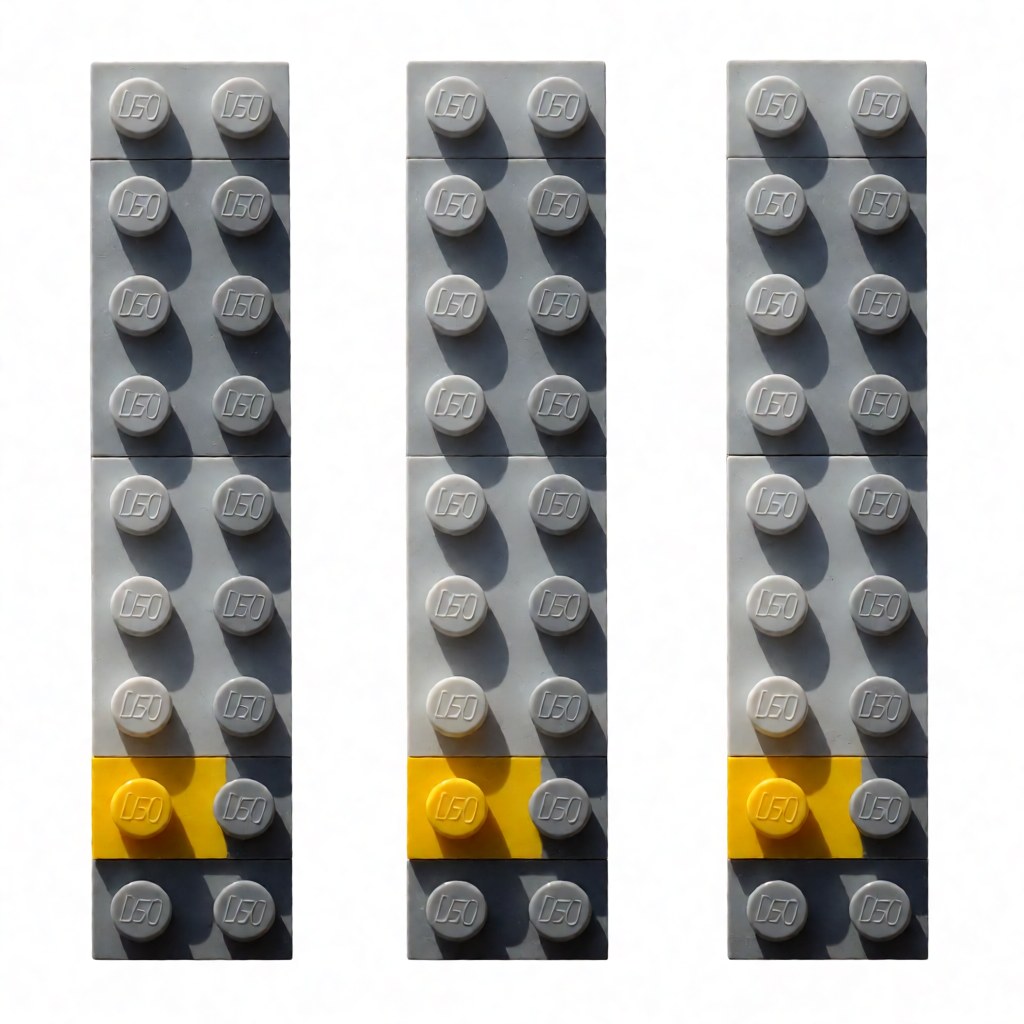
- Colour range. Discontinued colours and unusual ones — military greens, sand tones, translucent ranges — are often available only from alternative makers.
- Part variety for MOC work. A wider effective catalogue of shapes and brackets.
- Technical themes. Mechanical and powered ranges are strong, and cheaper to build in.
- Cost of experimenting. You can prototype a build cheaply and rebuild it without regret.
The hybrid strategy most builders actually use
- Official parts for anything handled, structural, or load-bearing.
- Alternative parts for scenery, interiors, bulk and prototypes.
- One brand per structural sub-assembly, so clutch stays consistent.
- One brand and one batch per visible face, so colour does not shift.
- Official electronics, always, unless the entire system is from one alternative maker.
- Buy parts, not sets, once you know what you want to build.
Done this way the effective saving on a typical MOC runs 50–70% against an all-official build, with no reduction in durability where it matters.
The cost of switching mid-collection
If you already own a large official collection, the sensible move is not to switch but to split: keep official parts for the models you handle, and add alternative parts for the bulk categories. Repurchasing a collection to change brands makes no financial sense — the price advantage applies to new purchases, not to replacing what you own.
The one exception is structural bulk: standard bricks and plates bought in large lots are cheap enough that building up a supplementary pile is genuinely worthwhile, and it immediately widens what you can build.
Two purchases compared, in numbers
The same 1,200-part model, two ways. Prices are the ranges you would actually pay in 2026, converting local pricing to USD for comparison.
| Line item | All official | Mixed build |
|---|---|---|
| Structure and frame, 300 parts | 40 – 55 | 14 – 20 |
| Bulk walls and filler, 600 parts | 70 – 100 | 20 – 32 |
| Detailing, tiles and slopes, 250 parts | 30 – 45 | 9 – 15 |
| Printed and special parts, 50 parts | 8 – 14 | 8 – 14 (official) |
| Sorting and storage | 5 – 12 | 5 – 12 |
| Total | 153 – 226 | 56 – 93 |
The mixed build costs roughly 40% of the all-official one, and the parts you would notice a difference on — printed elements and anything handled constantly — are still official. That is the shape of the decision for most builders: not replacement, but allocation.
A seven-step evaluation when the model matters
- Decide the subject and part count first. Everything else follows from it.
- Pull the parts list and mark which parts are load-bearing, which are visible, and which are bulk.
- Allocate sources: official for load-bearing and printed, precision alternative for tight interiors, bulk alternative for filler and scenery.
- Check rare colours before committing; they can absorb a quarter of the budget.
- Price both routes using cost per part, not box price.
- Order one batch per colour for anything visible.
- Build a test wall first with the new batch — twelve courses, tapped and pressed — before starting the real build.
Steps two and three take fifteen minutes and consistently save more than the discount itself, because they prevent the mistake of buying a set for its parts.
Pitfalls when buying alternatives
- Copying an in-production licensed set. Legally contested and quality-variable; treat it as a separate category rather than a general recommendation.
- Judging by box art. Renders hide colour and gaps. Look for buyer photographs.
- Ignoring batch variation. Buy one order per colour for visible faces.
- Assuming electronics interchange. Connectors may fit while voltage and protocol differ.
- Choosing on part count alone. Part mix matters more: small parts and special elements drive both cost and build time.
How to test a batch in ten minutes
Build a 12-course wall with the new parts, a 6x8 plate over a span, and one small SNOT panel. Tap the wall, press the plate corners, and check the panel's flatness against a straight edge. Those three tests cover clutch, flatness and geometry — three of the four properties that actually vary between brands. The fourth, colour, you check in daylight against parts you already own.
Repeat the test whenever you change brand or batch, not only when you change model. Most disappointments attributed to "cheap bricks" are actually a single bad batch, and a ten-minute test catches it before it is inside a finished build.
FAQ
Q: Can Chinese bricks replace LEGO entirely? A: For display models, large scenes and MOC parts, effectively yes. For young children's play and licensed themes, no. The honest answer is a split, not a switch.
Q: Are Chinese bricks compatible with LEGO? A: Yes, when they use the standard stud geometry, which the leading brands do. They click together and are routinely mixed in one build.
Q: How much cheaper is a comparable build? A: Roughly a third of the official price, reaching a fifth for bulk standard parts. The ratio is stable enough to plan with.
Q: What is the single biggest quality gap? A: Instruction quality and colour consistency — both more visible in everyday use than dimensional precision, which is where most comparisons focus.
Choose by use case, then mix rather than switch. The BrickPlan blueprint library lists the parts in every plan, so you can price the same model both ways before you decide.