Gobricks Parts Review: Precision Worth Paying For
Gobricks (Gao Zhuan) is the closest thing to official part quality in the alternative market. Its clutch is consistent, its moulding is clean, and independent comparisons put its interchangeability with official parts above 95%. You pay more per piece than any other compatible brand for that consistency — which makes it the right buy for tight sub-assemblies in a MOC and the wrong buy for bulk scenery.
The brand's business model explains almost everything about the parts. Most Chinese makers design sets and manufacture the parts to go with them. Gobricks started by selling parts, and other brands' models are built from its output. Its own plan and set lines came later, so the parts are the product rather than a by-product of a set.
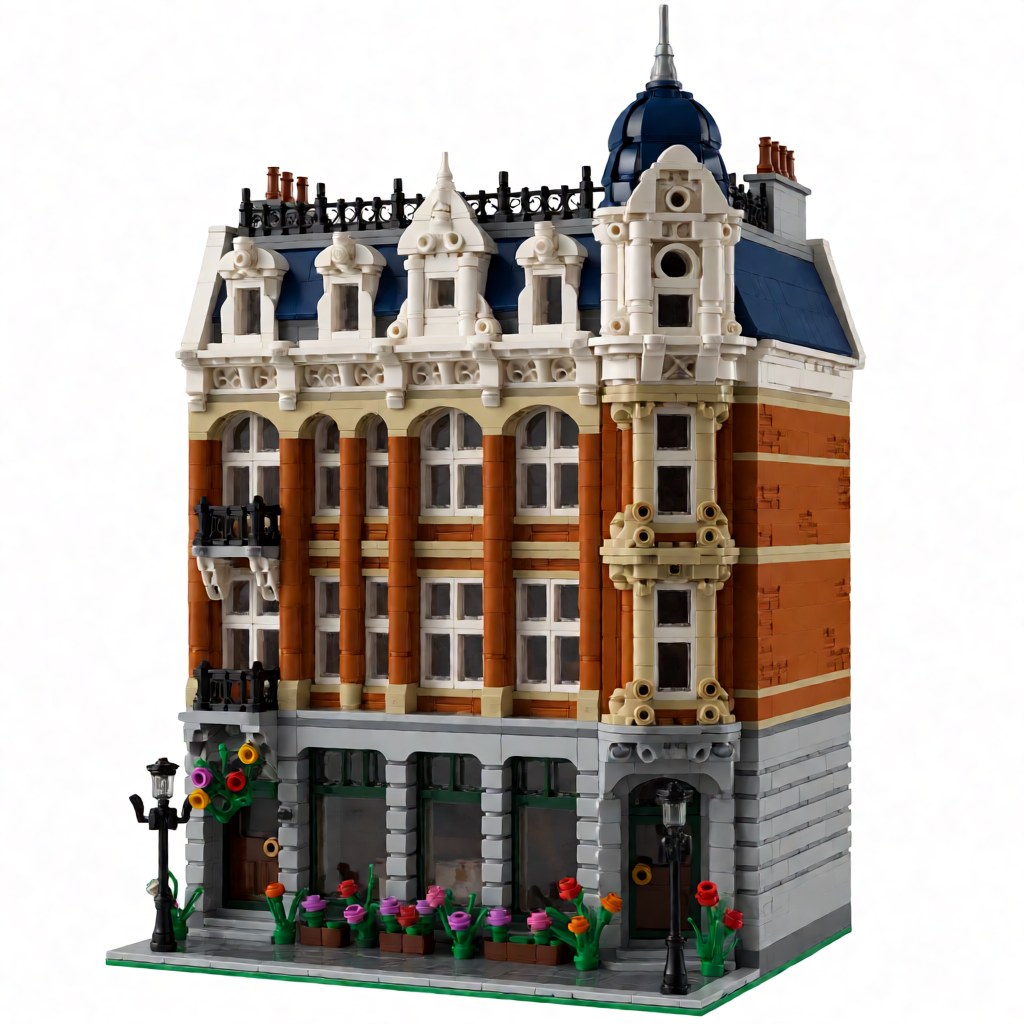
What the plans cover
The plan catalogue spans street scenes, architecture, mecha and vehicles, with part counts typically between 500 and 5,000 pieces. That range tells you what the brand is for: mid-size display models and parts-driven MOC builds, not 100-piece pocket sets.
Because Gobricks parts are used across the category, plans from other designers often specify them by name. On BrickPlan a large share of plans carry a "Gobricks-compatible parts" note, which means you can usually build a plan exactly as designed rather than substituting and hoping.
Precision: what "95% interchangeable" actually means
Tolerance is the brand's headline claim, and it holds up in the two places that matter:
- Clutch uniformity. Press a hundred identical bricks together and they feel the same hundred times. There is no scatter between tight and loose within a batch, which is the most common complaint about cheaper alternatives and the hardest to work around.
- Interference with official parts. Independent comparisons place interchangeability above 95%. In practice that means an official brick seats into a Gobricks assembly, and the reverse, without the joint feeling foreign. For a mixed build, that is the property that matters most.
Why tolerance matters more than any other specification: the geometry of every compatible brick is nominally identical, but the interference fit that creates clutch sits inside a narrow band. A maker whose parts sit at the edges of that band produces a wall that feels inconsistent — some joints fighting, others slipping. Gobricks sits consistently in the middle, and consistency is not something you can repair with technique.
Build feel
One word covers it: smooth. Pressing a part requires no force and produces no doubt about whether it seated. Nothing about the build requires you to work around the material, which is exactly what you want from parts you paid a premium for.
Two practical consequences:
- Fewer mid-build corrections. With cheap parts, a fraction of steps go wrong because a slot was misaligned or a part went in crooked. Those corrections vanish with tight tolerance.
- Disassembly is predictable. Parts come apart with a brick separator and without cracking or whitening. That matters if you build the model twice or want the parts back for the next project.
Instruction quality is above the category average: clear colour separation, legible step images and natural transitions between steps. The printed reference images are the part that ages best — the plan does not depend on you recognizing a part shape by memory.
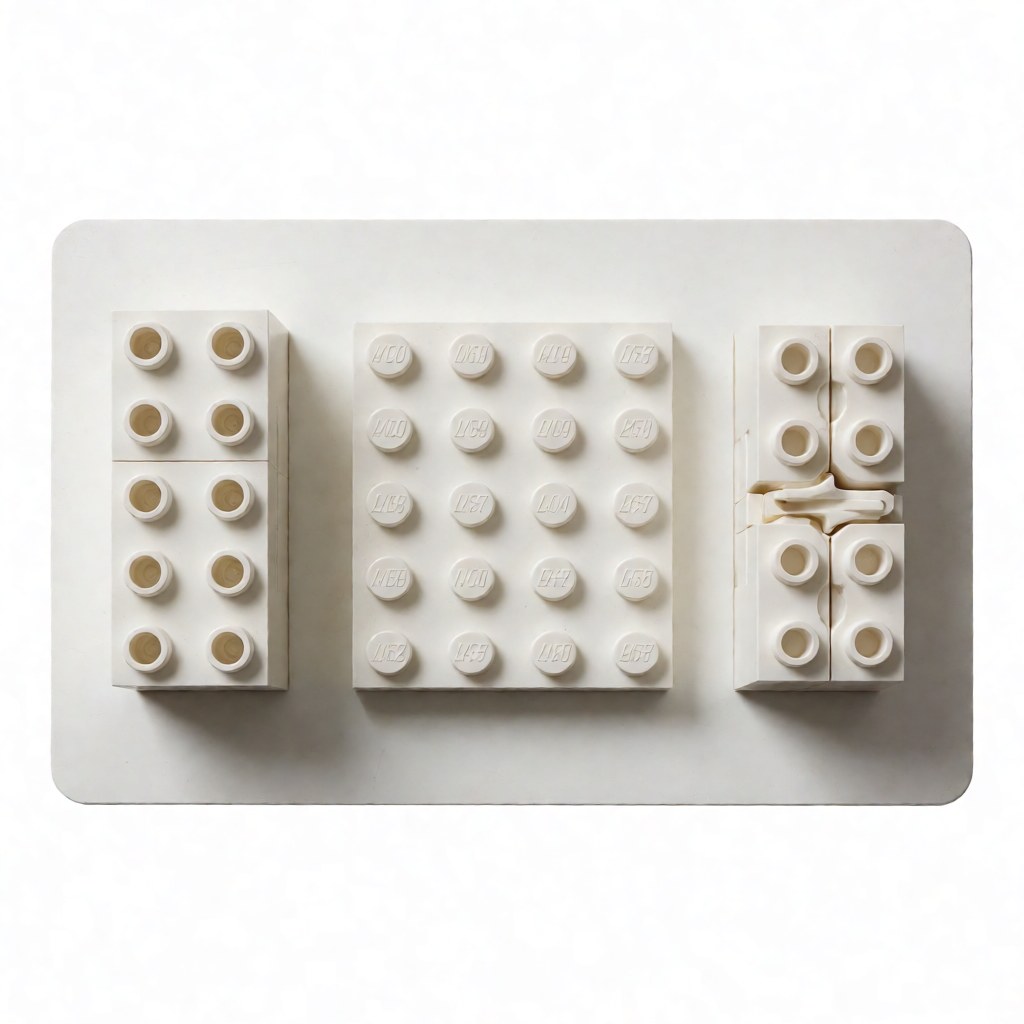
What the tolerance shows up as in a finished model
Precision is not an abstract property; you see it in four places once the model is standing:
- Uniform seams. Where a hundred parts line up, any tolerance scatter becomes a ragged line. Consistent parts give a constant shadow gap along the whole run — the difference between a model that reads as manufactured and one that reads as assembled.
- Flat facades. A large tiled face stays flat because every plate seats to the same depth. Mixed tolerance shows up as a subtle wave that catches light from one direction only.
- No stress whitening. Parts that had to be forced show pale marks at the edges, usually months later. Assemblies that seat without force do not develop them.
- Predictable disassembly. You can plan to take a model apart for a second build, because parts do not grab irregularly on the way out.
None of those are visible in a photograph of the finished model, which is exactly why the premium is easy to underrate until you have built the same plan twice with two different parts sources.
Three builds where Gobricks pays for itself
- A SNOT facade. Brackets and reverse bricks are where tolerance differences appear first, because a half-plate offset either lands or it does not. On this kind of build, a cheap batch costs an evening of re-seating.
- A mechanical assembly. Anything with gears, axles or moving links needs consistent clearances. A gearbox built from variable parts will bind in one place and skip in another.
- A thin-walled display piece. Where three plates meet at a corner with nothing behind them, mismatch becomes a visible gap on the most photographed part of the model.
For those three, buy precision. For a wall, a hillside or a pile of scenery, buy the cheapest parts that hold, and put the difference into more bricks.
Where Gobricks falls short
An honest list, because the premium needs justifying:
- Fewer sets of its own. The catalogue is thin compared with brands that lead with sets. If you want a boxed build experience rather than parts, this is not the brand for you.
- Higher price per piece. Expect to pay noticeably more than mid-tier alternatives. The premium buys consistency, not more bricks.
- Planning is required. Buying hundreds of individual part types takes organisation. Start from a proper parts list rather than a wish list.
- Colour availability rotates. Verify availability before designing around a specific colour; discontinued colours are as much a problem here as anywhere.
- No answer for licensed subjects. Not a weakness of the parts, but worth stating plainly if that is what you actually want to build.
Price reality
The useful comparison is not Gobricks against official parts, it is Gobricks against the rest of the alternative market:
| Route | Cost per piece (approx.) | Consistency | Best use |
|---|---|---|---|
| Official parts | 0.11 – 0.17 | Highest | Handled, load-bearing, licensed |
| Gobricks | 0.06 – 0.10 | Very high, uniform | Tight sub-assemblies, exact-fit builds |
| Mid-tier alternative | 0.03 – 0.06 | Good on standard parts | General building, structure, scenery |
| Bulk standard parts | 0.01 – 0.03 | Variable | Filler, practice, non-visible areas |
The correct strategy for most builders is to split: Gobricks where tolerance decides whether an assembly closes, mid-tier parts for walls and scenery, bulk lots for filler. Doing that typically lands 40–55% below an all-official build while keeping the parts that matter.
How to test the brand in twenty minutes
Buy 20–30 standard bricks and five or six small brackets, then:
- Build a ten-course column and press the top. It should hold without flexing and come apart cleanly.
- Build a 6x8 plate span and press the corners. Rocking means warped plates, which will bow the model.
- Fit a Gobricks bracket onto an official brick, then the reverse. Both directions should feel the same.
- Build one small SNOT panel. This is where tolerance differences surface first — brackets magnify them.
- Compare colour in daylight against parts you own in the same nominal colour.
Passing all five justifies the premium. Passing three means buying the brand for selective use rather than by default.
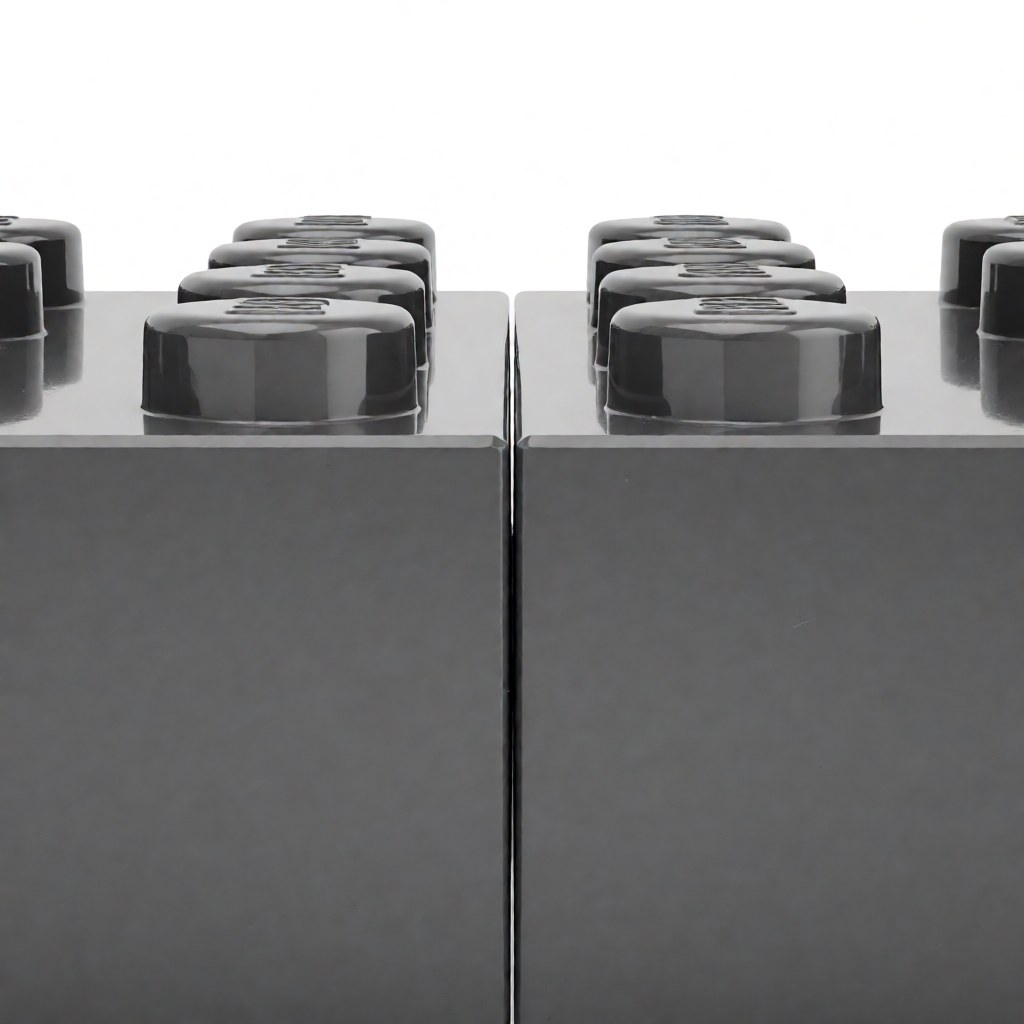
Who should buy Gobricks
Buy it if you build MOC plans from parts lists, your designs include tight sub-assemblies or SNOT facades, you have been frustrated by inconsistent clutch in another brand, or you want a mixed build where the joints behave the same throughout.
Skip it if you are filling a starter parts bin, building large scenery where precision is invisible, buying for a young child who will rebuild constantly, or you want a boxed display model rather than a parts order.
Two buying notes
First, buy enough to finish the assembly. Tolerance consistency is a property of a batch, so mixing a new order into an existing one for the same visible face is the one way to reintroduce variation. Second, keep the brand identifiable in your parts bins. Once you have felt the difference, you will want to know which pieces to reach for when a step needs to close cleanly.
FAQ
Q: Are Gobricks parts better than other compatible brands? A: On consistency, yes — clutch and moulding quality sit at the top of the category. Cheaper brands match it on standard bricks and fall behind on brackets, small slopes and thin plates.
Q: Is the higher price per piece worth it? A: For parts in a tight assembly, load-bearing elements and visible faces, yes. For bulk filler and scenery, the premium buys nothing you can see.
Q: Do Gobricks parts fit official bricks? A: Yes, with interchangeability measured above 95% in comparisons. Mixing is routine, and the reverse direction — official parts into a Gobricks assembly — feels equally normal.
Q: How do I plan a Gobricks build without overspending? A: Read the parts list, sort by quantity, and buy the top 20 part types first. Those usually cover most of the model, and they are the parts where the precision premium pays.
Pick the parts where tolerance decides the outcome and buy mid-tier everywhere else. Plans on the BrickPlan blueprint library list their parts, so you can see exactly where a precise brand is worth the extra.