Cheap LEGO Alternatives: What to Buy at Each Budget
Work backwards from cost per part, not from box price. Compatible-brand sets land at roughly one third of the official price for the same part count — sometimes a fifth for bulk standard parts — so a "$60 set" question is really a "how much do I pay per piece, and what do I actually want to do with them" question. At 25 USD buy a small alternative set to learn with; at 100 USD you are deciding between one official set and three alternatives; at 200 USD, buying parts beats buying sets for anything parts-driven.
The table below is the short version; the rest of the guide explains where each number comes from, which savings are real, and which ones quietly cost more in the end.
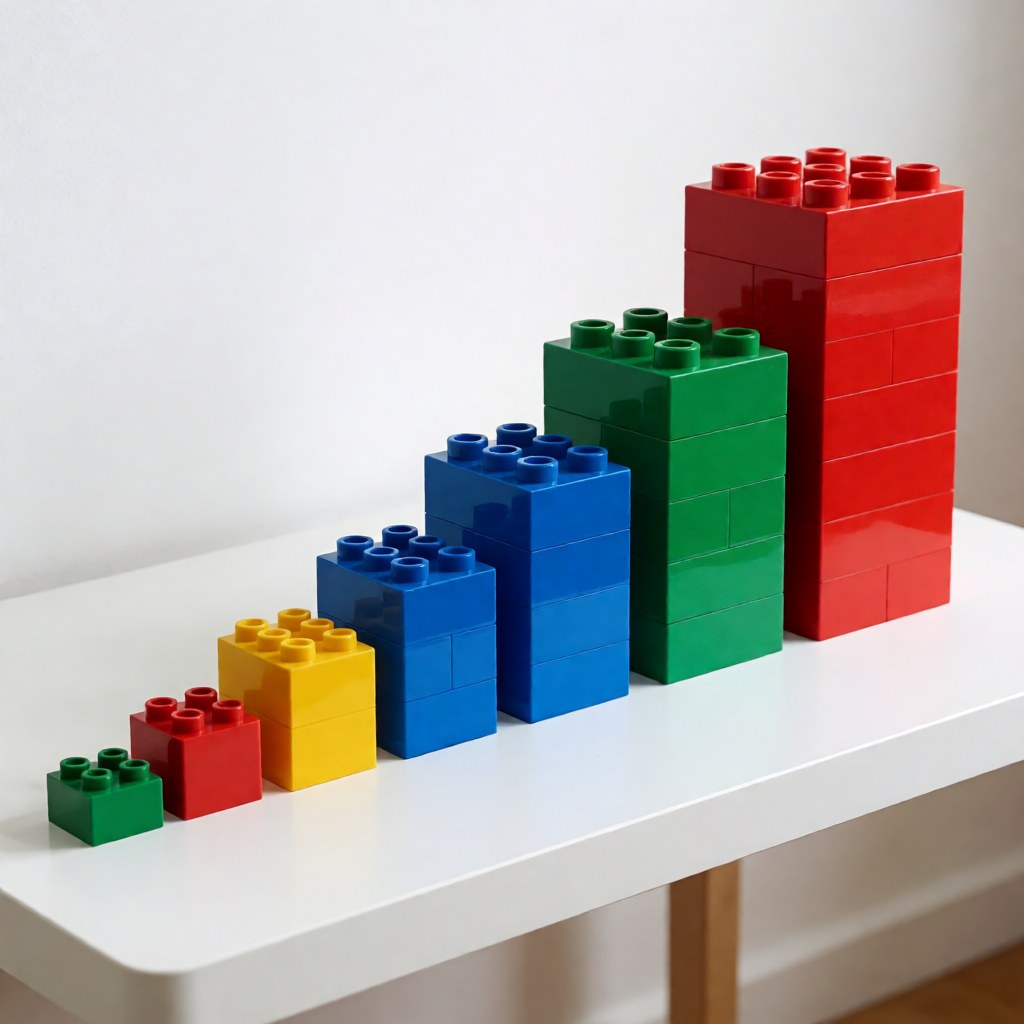
Cost per part, by brand tier
Approximate 2026 street prices. Converted to a common currency for comparison; local prices vary with import duty.
| Brand tier | Cost per piece | vs official | Notes |
|---|---|---|---|
| Official | 0.11 – 0.17 | baseline | Best clutch durability, licensed themes |
| Top-tier alternative (precision) | 0.04 – 0.07 | about 1/3 | Consistent moulding, higher per piece than entry brands |
| Mid-tier alternative | 0.03 – 0.06 | about 1/3 | Best balance for general building |
| Entry-tier alternative | 0.02 – 0.05 | about 1/4 to 1/5 | Fine for scenery and practice, variable finish |
| Bulk standard parts, by weight | 0.01 – 0.03 | about 1/5 to 1/8 | Cheapest route to a parts bin |
Read the table with one caveat: cost per piece is not the only number. A 2x4 brick and a 1x1 tile are not the same value at the same price, and a set with large parts is cheaper per piece than a set of small ones. Compare cost per piece only within similar part mixes.
Tiers of comparable builds
Where the savings actually accumulate:
| Build type | Official price | Alternative price | Saving |
|---|---|---|---|
| Standard set, 1,000+ parts | 110 – 210 | 20 – 55 | 70 – 80% |
| Technic or mechanical set | 140 – 280 | 28 – 70 | 75 – 85% |
| Bulk parts, 100 pieces | 7 – 14 | 1.5 – 4 | 70 – 90% |
| Display building, 2,000 parts | 180 – 250 | 55 – 90 | 65 – 75% |
The consistent takeaway is not the exact percentage but its stability: about one third across the range, improving toward one fifth for bulk standard parts. Claims of "ten times cheaper" generally compare a bulk parts lot with a licensed set, which is not a like-for-like comparison.
What to buy at each budget
Up to 25 USD. A small alternative set in the 300–600 part range, chosen for a subject you like. This is learning money: you are buying a build experience and a starter parts pile, not a display centrepiece. Alternatively, spend it on a bulk lot of standard bricks and plates — it goes further, but you have nothing to build from yet.
Around 50 USD. Two paths. One mid-size alternative set, or two smaller ones in different themes. Prefer different themes: two sets with different part mixes build a more useful parts bin than two copies of the same subject.
Around 100 USD. The interesting tier. One official set of moderate size, or two to three alternative sets of comparable part count, or a plan plus the parts to build it. If your interest is MOC building, the plan-plus-parts route wins decisively — you end up with the model you chose plus a parts pile with a purpose.
Around 200 USD and above. Buy parts, not sets, unless the set itself is the point. At this budget a downloaded plan plus a parts order produces a 2,000-part model, and the parts remain usable afterwards. Two cautions: order in one batch per colour to avoid visible variation, and price the rare elements before committing, because a handful of unusual colours can absorb a quarter of the budget.
The used market, honestly assessed
Used official sets are the cheapest route to official parts, with two caveats:
- Completeness is the risk. Verify against the instruction callout page and ask for a photograph of the actual bricks, not the box. A missing rare part can cost more than the saving.
- Clutch wears. Heavily played-with parts feel looser. For display, irrelevant; for repeated builds, choose new.
Used alternative sets are rarely worth it — the new price is already low, and the missing-part risk is the same.
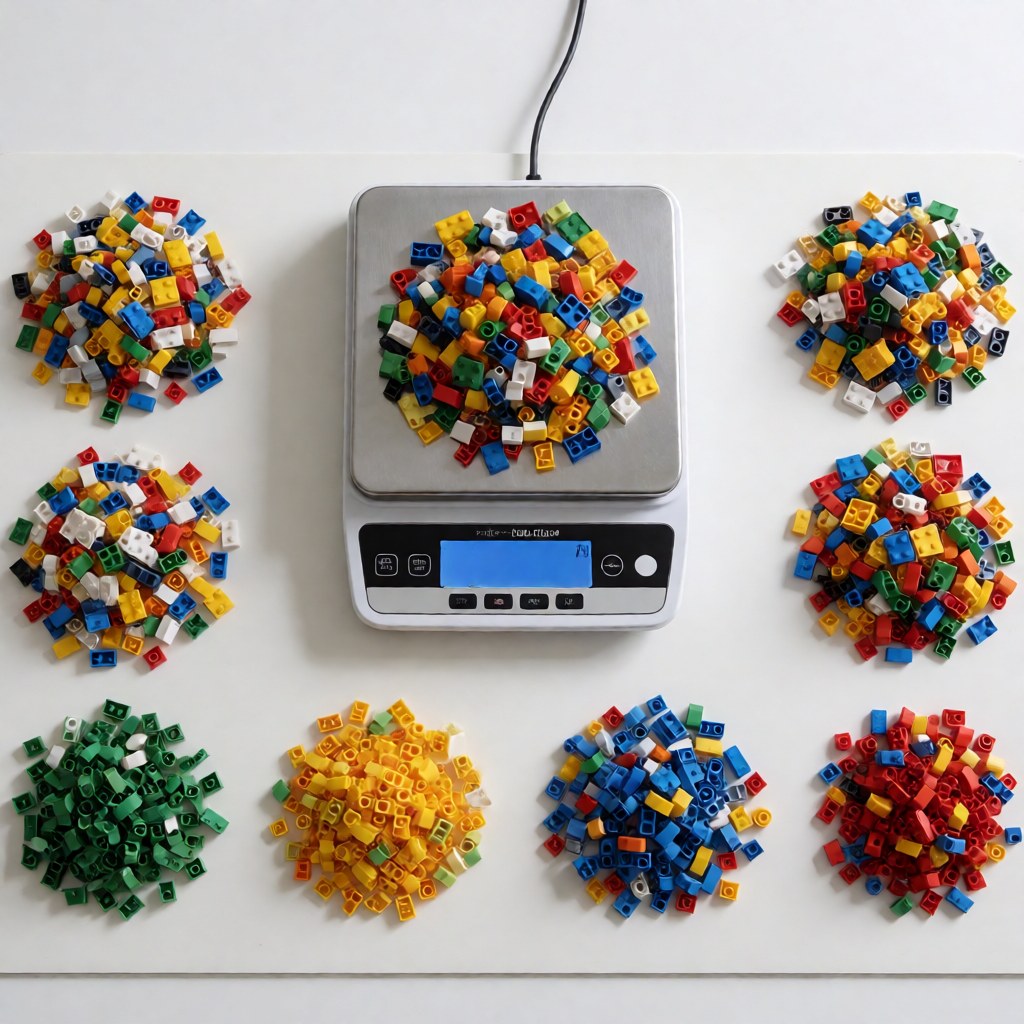
Bulk parts: the biggest single saving
Buying standard bricks and plates by weight is where the deepest discounts are:
- Weigh rather than count. A 2x4 brick averages a bit over 2 grams; a 1x2 plate well under 1 gram. Weight times a per-part average gives a usable estimate without counting thousands of pieces.
- One lot per colour family. Colour varies between batches, and mixing lots shows up on any flat surface.
- Start with structural parts. Plates, standard bricks, Technic pins and axles appear in nearly every plan.
- Expect imperfect content. A small fraction of a mixed lot will be discoloured, chewed or non-standard. Fine for scenery, not for a visible face.
A realistic starting bin: 25–40 USD of bulk standard parts plus 5–12 USD of sorting trays. The trays are not optional in practice — sorting by part type cuts build time substantially and removes most mid-build searching.
Where not to save money
- Structural parts in a load-bearing assembly. Cheap plates that bow will bend the model, and no amount of bracing compensates.
- Anything on a visible front face. Colour and finish variation is most visible exactly where people look.
- Motors and powered components. Cheap motors fail and take the build with them; the few dollars saved are not worth the diagnosis time.
- Sorting and storage. Trays and drawers pay for themselves within two builds.
- Instruction quality. A confusing booklet costs hours, and hours have a price.
Hybrid strategy: where the real savings are
The cheapest builders rarely buy one brand exclusively. Their pattern:
- Official parts for anything handled, structural or load-bearing.
- Alternative parts for scenery, interiors, bulk and prototyping.
- Bulk lots for the standard parts that every plan needs.
- Precision alternative brands for tight sub-assemblies where mould quality matters.
- One batch per colour for anything on a visible face.
Used this way, the effective saving on a typical MOC runs 50–70% against an all-official build, without giving up durability where it matters.
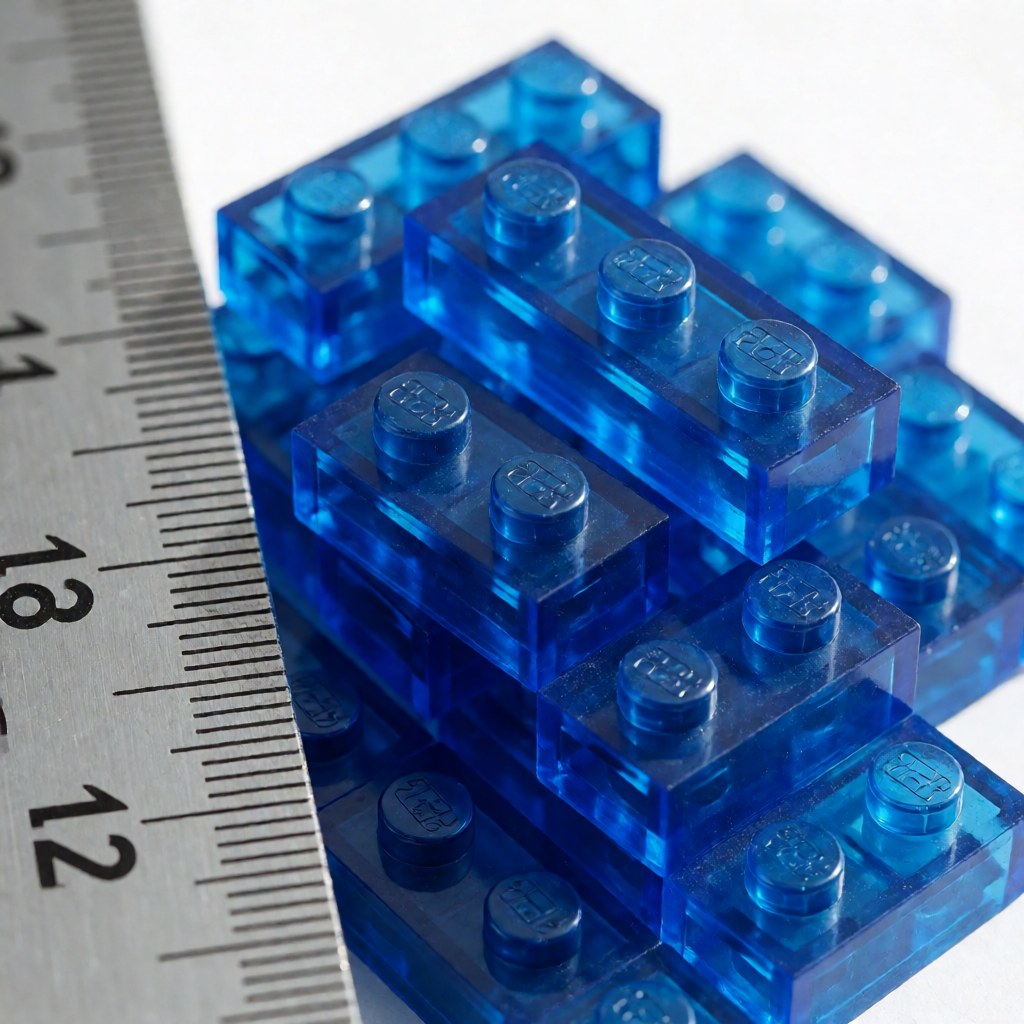
Evaluating a listing in two minutes
Six checks, in order. Each one filters out a class of bad purchase:
- Cost per piece. Divide the price by the stated part count. If it is above the entry-tier band, you are paying for something other than parts.
- Part count precision. A precise number such as 1,247 suggests a verified inventory; "about 1,200" does not.
- Owner photographs. Look for a photograph of the assembled model on a desk, not the rendered box art. Renders hide gaps, sag and colour shifts.
- Instruction quality. Search the reviews for the word "instruction". This is the category's most common complaint, and it is invisible in the listing.
- Missing-part policy. Check whether the seller replaces short shipments before you need it, not after.
- Shipping origin and weight. Freight on a 2 kg box can be a third of the total on a small order, which erases the saving entirely on cheap sets.
Setting up a first parts bin
The bin matters more than the next set you buy, because it decides what you can build without shopping:
- Structural layer first: standard bricks in two or three sizes, plates in two or three sizes, Technic pins and axles. This covers most plan parts lists.
- Colour discipline: pick four to six working colours rather than a little of everything. A narrow palette in useful quantities builds more than a wide palette in dribs.
- Slopes and tiles second: they convert a boxy build into a modelled one, and they are cheap in bulk.
- Special parts last: buy them per plan, not speculatively. Special parts bought early are usually the wrong ones.
- Store by type, not colour. Instructions ask for part types; colour is noise once the parts are on the table.
A bin built this way covers the majority of a 400-part plan's list, which changes the cost of every subsequent build from "a set" to "the handful of parts I lack".
Five budget traps
- Buying sets for their parts. Unless the price per piece beats individual purchase, you are paying for a box and a booklet you did not want.
- Oversized first purchases. A 2,000-part set as a first build stalls partway through; the money is spent and the model never finishes.
- Ignoring shipping. Cross-border shipping can erase the entire saving on a single small set. Buy in fewer, larger orders.
- Duplicate subjects. Two similar sets give a narrow part mix. Variety builds a more useful bin.
- Chasing the absolute cheapest lot. The bottom of the market has the highest rate of unusable parts, and unusable parts are the most expensive parts you can buy.
FAQ
Q: How much do cheap alternatives actually save? A: Around two thirds off official prices for comparable part counts, and up to four fifths for bulk standard parts. The saving is stable, and the "many times cheaper" claims you see usually compare unlike things.
Q: Is it cheaper to buy a set or to buy the parts for a plan? A: For a plan you specifically want to build, buying parts wins — you get exactly the model you chose. For building a parts bin, bulk lots win. For a build experience out of a box, the set wins.
Q: Are cheap bricks bad for children? A: Not inherently, and low-cost sets are a reasonable choice for young children who rebuild constantly. Check the age grading and the small-parts warning on any set, and be aware that entry-tier parts loosen faster under heavy play.
Q: What is the best $50 upgrade to a collection? A: Two sets in different themes rather than one, plus a set of sorting trays. A narrow part mix limits what you can build far more than total part count does.
Set the budget, then choose the route — set, plan, or bulk. The BrickPlan blueprint library lists the parts used in every plan, which is the number you actually need to compare a cheap route against an expensive one.